


In short
- For a first visit, stay in Sultanahmet or Karaköy and Galata. The old city puts the great monuments on your doorstep; Karaköy adds restaurants and evenings, a tram ride away.
- Nişantaşı suits shopping, dining and longer stays, and the Bosphorus shore from Ortaköy to Bebek suits travellers who want calm and the water, at the cost of longer drives.
- The Asian side, in Kadıköy, Moda or Üsküdar, is for second visits and for those who want the city as residents live it, linked to the sights by ferry.
- Traffic decides more than distance. Istanbul Airport is on the European side and Sabiha Gökçen on the Asian side; choose a base that keeps your daily journeys short.
The best area to stay in Istanbul depends on what you came for. For a first visit, Sultanahmet puts Hagia Sophia, Topkapı and the Blue Mosque on your doorstep; for restaurants and evenings, Karaköy and Galata; for shopping, Nişantaşı; and for calm and the water, the Bosphorus shore between Ortaköy and Bebek. Istanbul is so large, and its traffic so heavy, that the district you choose shapes every day of the trip.
This is how we advise clients on where to stay in Istanbul: what each area is like, who it suits and what its drawbacks are. We do not name hotels here; the district comes first.
What is the best area to stay in Istanbul?
The best area to stay in Istanbul for most first-time visitors is on the European side, either in the old city around Sultanahmet or across the Golden Horn in Karaköy and Galata. Both are close to the main sights and to the T1 tram, and both reward walking. Returning visitors, shoppers and families who want space often prefer Nişantaşı or a hotel on the Bosphorus, and accept a drive to the monuments in exchange for a calmer base.
For three to five days, one base is enough. For a week or more, two work well: the old city for sightseeing, then the water to slow down. See our Istanbul itinerary for three to five days.
Sultanahmet vs Taksim vs Nişantaşı vs the Bosphorus shore
Sultanahmet, Taksim, Nişantaşı and the Bosphorus shore are the four bases most visitors weigh up, with Karaköy as a popular fifth. This is how they compare.
| Area | Character | Best for | Getting around | Drawbacks |
|---|---|---|---|---|
| Sultanahmet and Sirkeci | The Byzantine and Ottoman old city, with small hotels on quiet streets around the great monuments | First visits, sightseeing, early starts | On foot to the main sights; T1 tram; Marmaray rail at Sirkeci | Quiet in the evening; touts around the squares by day |
| Karaköy and Galata | Old banking streets turned into cafés, galleries and restaurants by the water | Couples, food, sightseeing with evenings out | Tram over the Galata Bridge to the old city; ferries from Karaköy | Steep, cobbled lanes; busy at weekends |
| Beyoğlu and Taksim | The modern centre: İstiklal Avenue, the square, theatres and bars | Nightlife, a central position | M2 metro; funicular down to Kabataş | Crowds, late noise, more street scams |
| Nişantaşı | Leafy and residential, the city's luxury shopping district | Shopping, dining, returning visitors, longer stays | M2 metro at Osmanbey; short drives to Beşiktaş and the Bosphorus | A drive, or a metro and tram change, to the old city |
| The Bosphorus shore | Waterside villages from Ortaköy to Bebek, old mansions and terraces over the water | Calm, views, families with time, a second base | Car along the coast road; ferries and private boats | One coast road that jams at rush hour |
Sultanahmet and Sirkeci: where to stay in Istanbul for the first time
Sultanahmet is the best area to stay in Istanbul for a first time if the purpose of the trip is the history. Hagia Sophia, the Blue Mosque, Topkapı Palace and the Basilica Cistern are a few minutes apart on foot, and the Grand Bazaar is a short walk or a couple of tram stops away. Staying close lets you reach the monuments before the tour groups.
Hotels in Sultanahmet are mostly small, many in restored wooden houses, some with rooftop terraces over the Sea of Marmara. The drawbacks are the quiet evenings, with fewer good restaurants, and the carpet-shop touts around the squares by day. Sirkeci, next door on the Golden Horn, is plainer but practical, with the Marmaray rail station and the Eminönü ferry piers on its doorstep.
Karaköy, Galata and Taksim: is it better to stay in Taksim or Sultanahmet?
For most visitors, it is better to stay in Sultanahmet for sightseeing, and in Karaköy or Galata, rather than Taksim itself, for evenings. Karaköy sits on the water at the foot of the Galata Bridge, its old bank buildings now restaurants and galleries. Galata rises behind it, steep lanes around the Galata Tower with small hotels and views across the Golden Horn.
Taksim Square and İstiklal Avenue are the modern heart of the city and its main transport hub, crowded day and night. That suits nightlife, but the noise carries late, and scams aimed at visitors are more common here. Cihangir, on the slope between Taksim and the Bosphorus, is a quieter residential alternative with cafés and long-stay apartments. Our guide to whether Istanbul is safe covers the scams worth knowing.
Nişantaşı, Beşiktaş and Levent: shopping and business
Nişantaşı is the best area to stay in Istanbul for shopping and dining. Its tree-lined streets around Abdi İpekçi Avenue hold the boutiques of international fashion houses and Turkish designers, with restaurants and cafés between them. Maçka Park is a few minutes' walk away. See our guide to luxury shopping in Istanbul.
Beşiktaş, below Nişantaşı on the water, has Dolmabahçe Palace, a ferry pier to the Asian side and a lively market quarter; football match days bring crowds and road closures. For business, Levent and Maslak to the north are the main office districts, on the M2 metro. A hotel near your meetings saves a daily drive through slow traffic.
The Bosphorus shore: Ortaköy, Kuruçeşme, Arnavutköy and Bebek
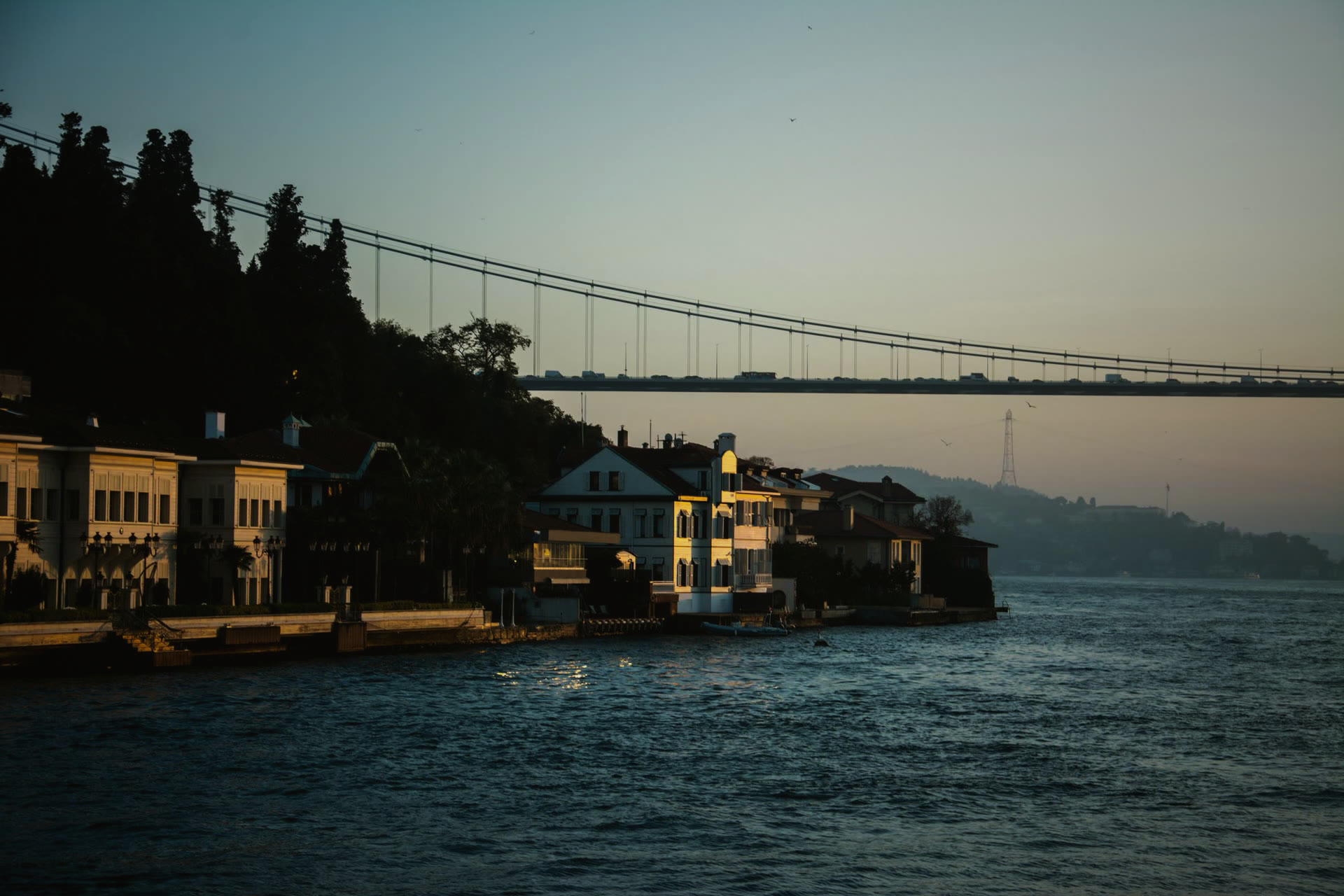
Staying on the Bosphorus is the Istanbul many returning visitors prefer: mornings on a terrace above the water, and the old city kept for planned outings. Ortaköy has its waterside mosque beneath the 15 July Martyrs Bridge and a square that fills at weekends. Kuruçeşme is known for summer clubs and restaurants on the water. Arnavutköy keeps rows of old wooden houses and a quieter pace, and Bebek, around its bay, is the most polished of the villages, with a promenade and cafés.

The drawback is the single coast road, slow at rush hour, so start sightseeing days early or go by boat. A car by the hour that waits outside each stop, makes a Bosphorus base far easier.
Staying on the Asian side of Istanbul
Staying on the Asian side of Istanbul makes sense for second visits, longer stays and travellers who want to see the city as residents live it. Kadıköy has the food market streets, cafés and bookshops, and Moda next to it has a seafront promenade with views back to the old city. Üsküdar is older and more traditional, with mosques by the great architect Sinan, a waterfront at sunset and the Marmaray rail tunnel to Sirkeci. Quiet Kuzguncuk, with its painted wooden houses, lies just up the shore.

Ferries cross from Kadıköy and Üsküdar to Karaköy, Eminönü and Beşiktaş, a pleasure in itself; the road bridges, at peak times, are not. Our day on the Asian shore is a good way to see the neighbourhoods before choosing to stay there.
The best area to stay in Istanbul with family, and the safest areas
The best area to stay in Istanbul with family is usually Nişantaşı or the Bosphorus shore, where larger hotels and residences have space, pools and parks close by. Sultanahmet works for children old enough to enjoy the monuments, though family rooms there are fewer. Our guide to Istanbul with kids has more on pacing the days.
There is no single safest area to stay in Istanbul. Sultanahmet, Karaköy, Nişantaşı, the Bosphorus villages and Kadıköy are all generally safe for visitors, including women travelling alone. The everyday risks are pickpockets in crowds and inflated bills, and they are highest around Taksim and İstiklal late at night.
Traffic, Bosphorus crossings and the two airports
Traffic is the factor visitors most often underestimate. Cars cross the Bosphorus on the 15 July Martyrs Bridge, the Fatih Sultan Mehmet Bridge and the Eurasia Tunnel; trains cross through the Marmaray tunnel, and ferries run between the shores all day. In the rush hours, a drive of twenty minutes can take an hour, so a base close to your plans matters more than any view.
Istanbul Airport (IST) is on the European side, roughly 40 km from Taksim and 45–50 km from Sultanahmet, usually 45 minutes to an hour by car in light traffic. Sabiha Gökçen (SAW) is on the Asian side, about 30 km from Kadıköy and around 50 km from Sultanahmet. If you land at Sabiha Gökçen late for a single night, the Asian side saves a crossing. Our Istanbul airport transfer guide has the drive times, and our transfers follow your flight.
A private residence or a hotel?
A hotel suits most stays in Istanbul of under a week: service at any hour, a concierge desk, security and breakfast without planning. A private residence or apartment suits families, longer stays and travellers who value privacy, with a kitchen, room to spread out and staff by arrangement.
If you rent, check that the home is licensed. Since 1 January 2024, homes let to visitors for up to 100 days in Türkiye need a permit from the Ministry of Culture and Tourism. Through Stays & homes we arrange hotels and homes to rent, ask for a particular room or house, and handle the contracts, keys and cleaning. For the season to come, see our guide to the best time to visit Istanbul.
Checked by the Megis team on 4 November 2026. Opening hours, rules and seasons change; we confirm every detail again when we plan your trip.
Sources
- Metro Istanbul metro.istanbul
- Ministry of Culture and Tourism istanbul.ktb.gov.tr


