


In short
- Cappadocia in winter is worth it for snow on the fairy chimneys, quiet valleys and cave hotels at their most atmospheric, as long as you pack for the cold and allow spare days.
- Winter days are cold and nights freeze: average highs in Nevşehir are about 6°C in December, 4°C in January and 6°C in February, with nights below zero.
- Balloons fly in winter, but only when the civil aviation authority allows each morning. Wind, fog and snow cancel more flights than in any other season, so plan three mornings.
- Snow is likely at some point from December to February but never guaranteed on a given date. Erciyes, about an hour and a half away, adds skiing to the trip.
Cappadocia in winter is the same landscape with the volume turned down: fewer people, colder air and, on the best mornings, fresh snow on the fairy chimneys and balloons rising over white valleys. It is also the season when the weather decides more of the plan, so the trip needs spare mornings and warm clothes.
We arrange Cappadocia in every season. This guide covers the winter weather, how often it snows, balloons in the cold months, what to wear, what to do on a frozen day and whether a winter visit is worth it.
Is Cappadocia worth visiting in winter?
Cappadocia is worth visiting in winter for travellers who want snow, quiet and atmosphere more than long valley walks. The light is low and clear, the rock-cut churches have no queues, and a cave room with the heating on is a very good place to come back to after a cold day. The trade-off is weather: freezing nights, short days and more cancelled balloon flights than in any other season.
| Month | Average high | Nights | Snow | Balloons |
|---|---|---|---|---|
| December | 6°C | Below freezing | First falls likely | Fly when allowed; frequent cancellations |
| January | 4°C | Below freezing | Most likely month | The coldest flights, the most cancellations |
| February | 6°C | Below freezing | Still likely | Fly when allowed |
Temperatures are average daily highs for Nevşehir from the 1991–2020 normals of the Turkish State Meteorological Service, the same figures we use in our guide to the best time to visit Turkey. The "snow" column is our reading of a typical winter, not a forecast.
What is the weather like in Cappadocia in winter?
Cappadocia's weather in winter is cold and dry by day and freezing by night. The region lies on the Anatolian plateau at over 1,000 metres, far from the sea, so the warmth of the coast never reaches it. Average highs in Nevşehir are about 6°C in December, 4°C in January and 6°C in February, and nights stay below zero on average through all three months.
Rain or snow falls on roughly twelve days a month from December to February, according to the long-term statistics of the State Meteorological Service. Between those days come still, frosty mornings with blue skies, which are the ones you hope for.
How often does it snow in Cappadocia in winter?
Snow in Cappadocia is likely at some point each winter, most often from December to February, but nobody can promise it for a given week. Some years bring several heavy falls; others are mostly dry and frosty. After a fall, snow can lie on north-facing slopes for a long time while the sunny valley floors clear within a few days.

If snow is the point of the trip, January is the safest bet, and a flexible date helps: we watch the forecast and can move a stay by a day or two when the plan allows.
Do balloons fly in Cappadocia in winter?
Cappadocia balloons fly in winter, but only on mornings when Türkiye's civil aviation authority allows it. The decision is made each day from the wind speed and visibility, and winter brings the most cancellations of the year: wind, fog, rain and snow can each ground the balloons, sometimes for several days in a row. When they do fly, the sight of balloons over snow-covered valleys at dawn is the image people travel for.
- Book the balloon for your first morning and keep the next two free, so a cancelled flight can move.
- Pick-ups are before dawn, at well below freezing. Dress for it, even in a heated vehicle.
- Balloon operators take children from about six; younger ones can watch from a terrace.
- Reputable operators do not fly in doubtful weather, and you should not want them to.
Our guide to a private balloon in Cappadocia explains how the morning works and how private baskets differ from shared ones.
Cappadocia in December, January and February
Cappadocia in December
December brings the first real cold and often the first snow. The week from Christmas to New Year is the busiest of the winter, with cave rooms and balloon seats booking up early. Outside that week, the region is very quiet.
Cappadocia in January
January is the coldest month and the most likely to bring snow. It is also the quietest, apart from New Year's Day itself, and the best choice for photographers who want white valleys and empty viewpoints.
Cappadocia in February
February is still winter, with snow possible and cold nights. In 2027, Ramadan begins on 8 February, which changes little for visitors but brings quiet days and lively evenings in the towns.
What to wear in Cappadocia in winter
What to wear in Cappadocia in winter is the same as for a mountain town: layers, not one heavy coat. Bring thermal underlayers, a warm mid-layer, an insulated coat, a hat, gloves and a scarf, and waterproof boots with a sole that grips on ice. The pre-dawn balloon pick-up is the coldest hour of the day, so wear everything. Indoors, cave hotels are heated and light clothes are enough.
What to do in Cappadocia in winter
The best things to do in Cappadocia in winter are the sights that work in the cold, with the long walks saved for dry, sunny hours.
- Göreme Open-Air Museum. The rock-cut churches with their frescoes are open every day from 8 am to 5 pm, with the ticket office closing at 4.15 pm, as checked on the official museum site on 4 November 2026. Go early, when the paths are firm.
- The underground cities. Derinkuyu and Kaymaklı stay at a steady, cool temperature all year, so on a January morning they feel milder than the frozen surface.
- Valley walks. Short walks in the Love and Rose valleys are beautiful after snow, with a guide who knows which paths are safe.
- Avanos. The pottery town on the Kızılırmak river, for a workshop visit on a grey afternoon.
- The cave hotel itself. A fire, a hammam if the hotel has one, and a terrace with a blanket for watching the balloons.
Our two-night Cappadocia at first light journey keeps this rhythm, with the balloon morning, a private guide and an afternoon in the underground cities.
Can you ski at Erciyes from Cappadocia?
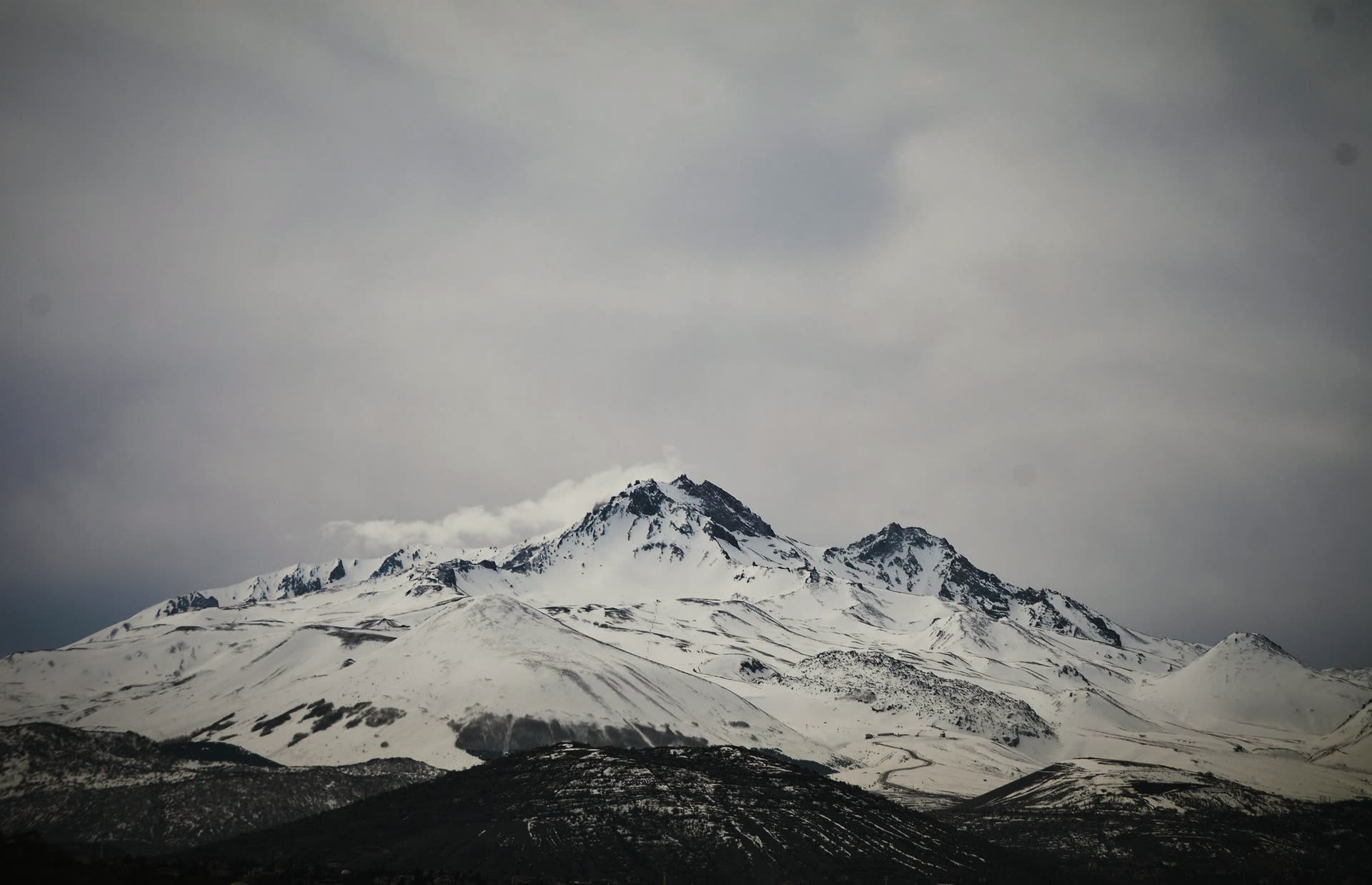
You can ski at Erciyes from a base in Cappadocia. The resort lies on the slopes of the extinct volcano above Kayseri, with lifts to about 3,300 metres, roughly an hour and a half by car from Göreme. The season depends on snow and usually runs from mid-December to late March, often into April; in 2025 it opened on 18 December. A day on the slopes followed by a night in a cave room is a combination few places can offer. Our ski weekend arranges instructors, equipment and passes, and our guide to skiing in Turkey compares Erciyes with the other resorts.
Getting there and getting around in snow
The quickest way to reach Cappadocia in winter is a flight from Istanbul to Nevşehir Kapadokya or Kayseri, then a car to your hotel. Nevşehir is about 35–40 minutes from Göreme and Kayseri about an hour or a little more; our guide to Cappadocia from Istanbul compares them. Winter weather can delay flights, so avoid tight connections, and we book seats through our flight tickets team with that margin in mind.
Main roads are cleared after snow, but early mornings can be icy and the lanes up to some cave hotels are steep and narrow. If you are not used to winter driving, a car with a local driver is the sensible choice. Choose a hotel with good heating and an easy approach in snow; our guide to where to stay in Cappadocia compares Göreme, Uçhisar and Ürgüp, and our stays team checks the room before you arrive.
Checked by the Megis team on 4 November 2026. Opening hours, rules and seasons change; we confirm every detail again when we plan your trip.
Sources
- Turkish State Meteorological Service mgm.gov.tr
- Ministry of Culture and Tourism: museums and sites muze.gov.tr
- Presidency of Religious Affairs (Diyanet) vakithesaplama.diyanet.gov.tr


